Tesla wants to open a dealership in Bismarck and Fargo. North Dakota won’t let it. Not because the cars are bad, and not because anyone’s filed a consumer complaint. It’s because of a decades-old law that was never written with Tesla in mind, and a judge just spent a ruling explaining why she’d rather not be the one to sort it out.
Here’s the backstory. Tesla sued the state back in April after North Dakota’s Department of Transportation refused to license it as a dealer. In June, a judge declined to rule on the actual question and sent the whole mess to an administrative appeals process instead, saying resolving just one piece of the statute would probably spawn a dozen more lawsuits down the line. So now Tesla has to formally appeal the license denial through the state agency that already denied it, and if that goes nowhere, back to court it goes. Nothing decided. Months burned. That’s the current state of the union.
The law itself makes sense on paper. States generally require automakers to sell through independent franchised dealers so a manufacturer can’t undercut the local dealer network it depends on for service and warranty work. Reasonable, for an industry built that way. Tesla doesn’t franchise anyone. It builds and sells the car directly, then services it too. Applying a law written to stop manufacturers from screwing over their own dealer network to a company that has no dealer network is like citing someone for violating their lease when they own the building outright.
North Dakota isn’t an outlier here. Tesla’s been through versions of this fight in roughly two dozen states for over a decade, and it’s rarely about protecting anybody who’s actually buying a car. It’s about protecting a business model that most people cannot stand. The stat gets cited so often it’s basically a cliché at this point, but it’s a real one: surveys have found somewhere north of 85% of consumers dislike the dealership buying process. Not the cars. The process. The four-hour visit where somebody keeps walking off to “check with a manager” who may or may not exist. States keep writing laws to defend that experience from a company that skipped it entirely.
Meanwhile, somebody actually fixed the problem, and he did it without asking a single legislature for permission. Tomi Mikula spent years as a car salesman, got sick of watching customers get worked over, and started Delivrd, a business that negotiates the deal on your behalf for a flat fee. He’s built it into a multimillion-dollar operation because it turns out people will happily pay a stranger to make the dealership experience go away. That’s the market doing exactly what it’s supposed to do: someone spots a widely hated pain point and builds a better way around it. No lawsuits required.
This is the part that gets me. I don’t have a problem with dealerships existing, and I don’t have a problem with an industry defending itself. Compete on price. Compete on not making people sit in a beige room for three hours waiting on a number that never changes. What I have a problem with is an industry that, instead of doing any of that, goes to the state capitol and gets a law used as a shield against a competitor doing it better. That’s not consumer protection. That’s protection from consumers finding out there’s a better way.
My two cents: if your product needs a state law to survive contact with a company that skips your worst habits, the problem was never Tesla.
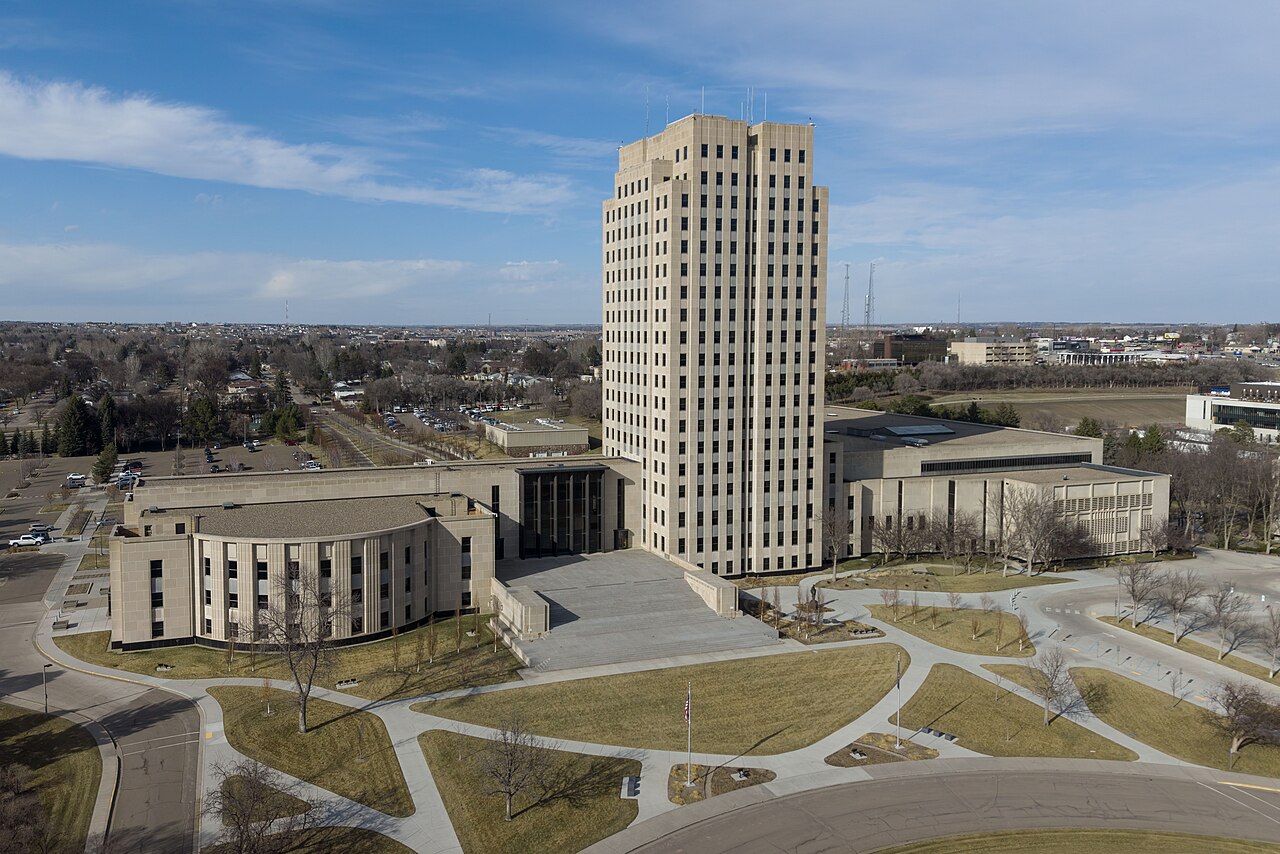
Photo of the North Dakota State Capitol by Quintin Soloviev via Openverse, licensed CC BY 4.0.