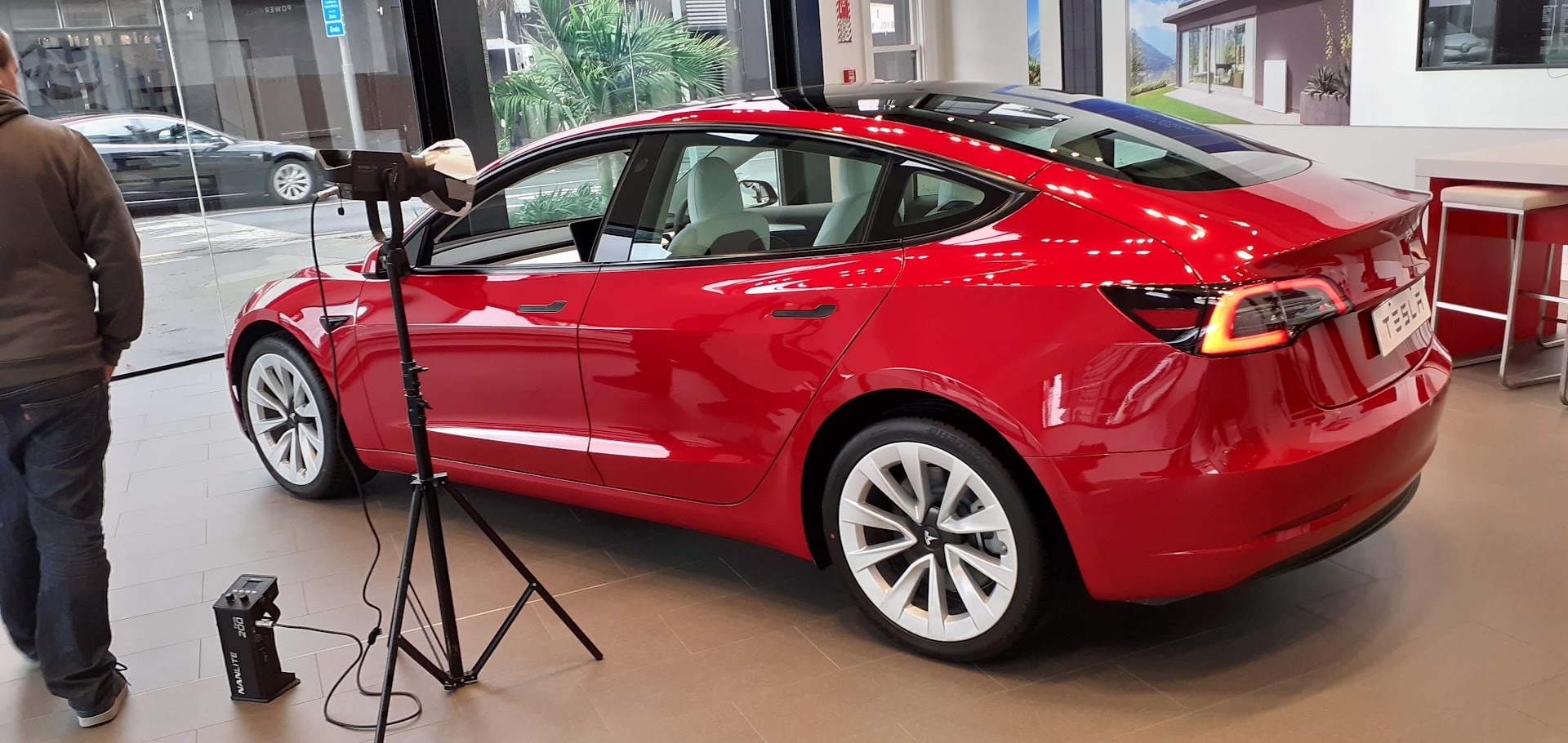
Nobody likes buying a car from a dealership. That’s not really an opinion at this point, it’s just consensus. A widely cited industry survey found 87% of people disliked something about the process, and if you’ve ever spent an afternoon waiting for a stranger to “check with his manager” over a number that was never real to begin with, you know that stat is generous.
So when a company came along and said, fine, we’ll just sell you the car ourselves — no showroom haggling, no surprise fees buried in the paperwork — you’d think the industry would take the hint and clean up its act. Instead it went to state legislatures. Fourteen states still ban Tesla from selling you a car directly. Texas is the best example: Tesla builds cars at a factory in Austin, and because of the state’s dealer-franchise law, those cars have to leave the state and come back before a Texan is allowed to buy one. Shipped out. Shipped back. Sold. Nine more states cap how many stores a direct-sales manufacturer can open, which is just banning it slowly instead of all at once.
Washington just gave a good look at how this actually moves when it moves at all. Rivian and Lucid were locked out the same way Tesla was for over a decade, until Rivian put $4.6 million behind a ballot measure that would have wiped out the state’s dealer-protection law entirely. Suddenly the lobby that had blocked expansion for years found its way to the table, and a bill passed the legislature almost unanimously. But look at how narrow the fix actually is. US-based only. All-electric only. No history of selling through a franchise dealer. A service center already open in the state. At least 300 vehicles already registered before this year. That’s not a state deciding direct sales are fine. That’s a state writing a law tight enough to let three companies through the door while keeping it bolted shut for everyone else.
Meanwhile, a guy who actually worked the sales floor looked at how much people hate the process and built a business fixing it from the buyer’s side instead. Tomi Mikula runs a company called Delivrd, and for $1,000 he and his team of negotiators will handle the whole miserable process for you — livestreamed to over half a million followers who apparently find watching a car deal more entertaining than living through one. He’s pulling in something like $200,000 a month doing it. Some dealers won’t even take his calls anymore. One called him a liar on camera and started calling him Bubba. That’s what it looks like when a market actually responds to a problem instead of legislating the response away.
Here’s the part that gets me. I don’t have an issue with regulation that solves a real problem — genuinely, I don’t. What bothers me is regulation that exists to protect one industry from a better idea and gets dressed up as something else. Nobody passed these franchise laws to protect you from a bad car-buying experience. They passed them to protect dealerships from ever having to fix one.
My two cents: if 87% of people hate how you sell something, the fix isn’t a law that stops someone else from selling it better.