I have watched every episode of Cheers more than once, which either makes me an expert or a person with a real problem. Possibly both. Somewhere around rewatch number three, I noticed something the show never wants you to notice: nobody working at that bar has ever agreed on what time it is.
Start with the hours. In some episodes, Sam’s flipping the sign at what looks like eight in the morning, coffee in hand, like a diner just opened for breakfast. In others, the whole gang is still parked at the bar at an hour that should mean last call, except everyone’s ordering full dinners instead of one more round. Nobody ever settled on what kind of business this actually is.
The real comedy is in the props, once you start looking for it. A full glass turns into an empty one, then vanishes completely, all between two camera angles in the same scene. A tray shows up stacked with dirty mugs, and three seconds later, on the cutback, it’s spotless and empty, like a bartender teleported in and did the dishes mid-sentence. The pretzel bowl might be the most inconsistent object in television history — full to the rim in one shot, empty in the next, then somehow refilled again before the scene even ends.
Then there’s the pay phone. Sam waves through random customers who need to make a call whenever the plot requires it, but that same phone is apparently getting hammered by actual bar patrons all day long. Either the entire city of Boston has flawless timing, or Cheers has the single most lightly used pay phone in Massachusetts.
None of this is really a knock on the show, and I want to be clear about that up front, because I will fight anyone who takes it as one. Cheers is one of the best-built sitcoms of all time, and the reason nobody caught any of this for eleven seasons is that the writing and the cast were good enough to make you stop counting pretzel bowls. Multi-camera shows filmed in front of a live studio audience, with no time or budget for a fourth take, will always have this problem. You’re basically filming a play. Plays don’t come with a continuity supervisor checking whether the beer’s at the right level from shot to shot.
That explanation covers the props. It doesn’t quite cover the clock problem. A messy tray is a production accident. A bar that’s serving breakfast in one episode and hosting a late dinner crowd in the next isn’t a mistake so much as proof that nobody on the writing staff ever decided what kind of place Cheers actually is. And maybe that’s the most true-to-its-era thing about the whole show. Nobody in 1985 was pausing a VHS tape to check the clock on the wall. They watched it once, laughed, and went to bed.
My two cents: if I can nitpick a show this hard, scene by scene, prop by prop, and still call it one of the best sitcoms ever made, that says a lot more about how good Cheers is than any inconsistency ever could.
PS: I should say the show didn’t start out this sharp. Season one is rougher than people remember — slower pacing, flatter jokes, a cast still finding its footing. It clicks by around season three and just keeps getting better from there. Worth knowing before you queue up the pilot expecting the show everyone quotes today.
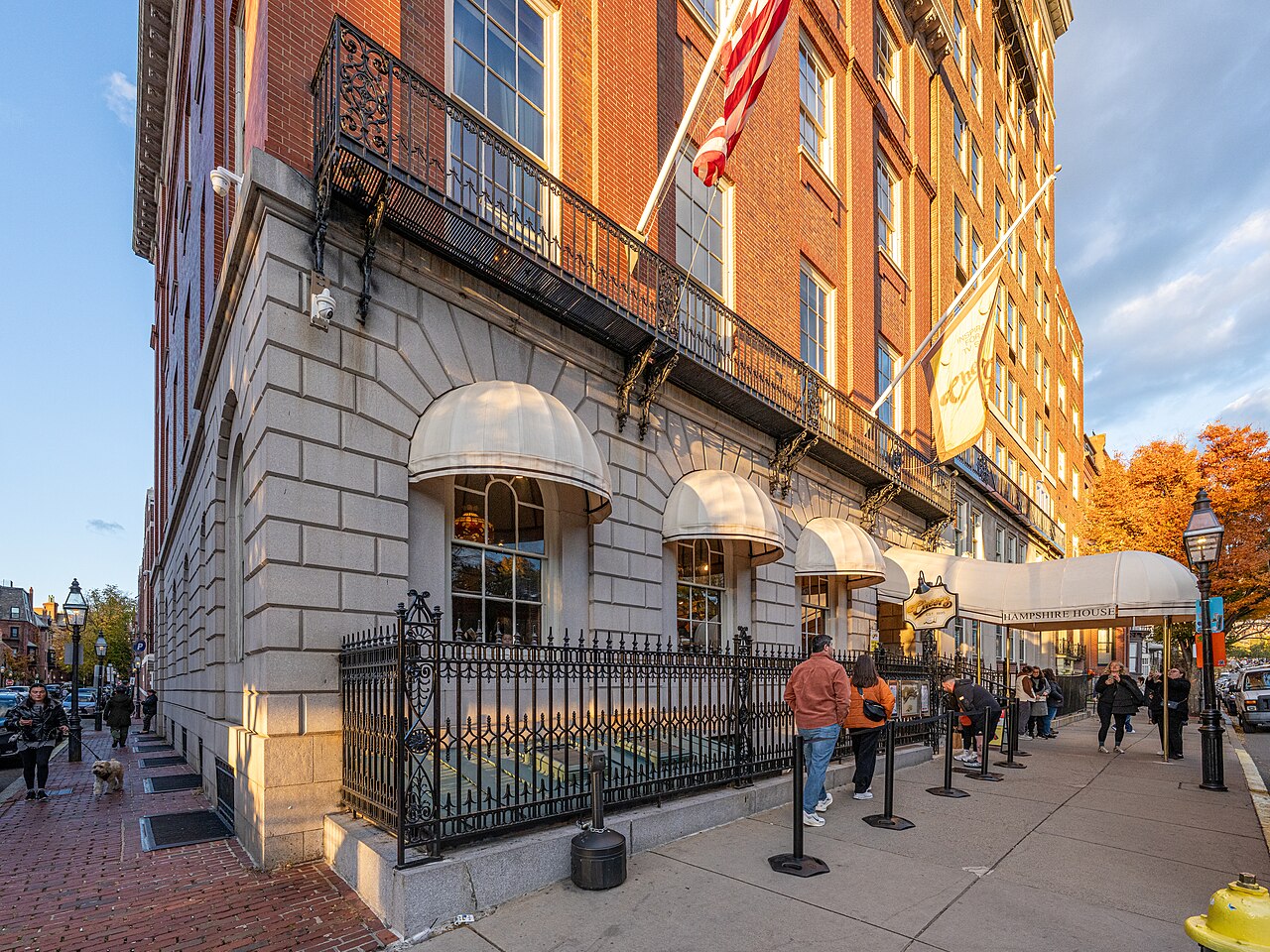
Photo of the real Cheers bar in Boston’s Beacon Hill neighborhood by ajay_suresh via Openverse / Wikimedia Commons, licensed CC BY.